How I Work With
I begin where things feel unclear, stuck or in flux.
Together, we explore the patterns, relationships and circumstances shaping your situation, opening up new perspectives and developing concrete next steps. My approach combines systemic thinking, a strengths- and resources-based perspective, and a focus on human connection and resonance. The methods I use are guided by your individual needs and concerns – never the other way around. The aim is to create meaningful change that not only makes sense during our conversations, but also works in everyday life.
Whether you’re coming to me with a personal concern or carry responsibility for a team or organisation, change calls for different perspectives and approaches.
Perhaps you’d like to know what working with me looks like before taking the first step. Here you’ll find answers to some of the questions that often come up.
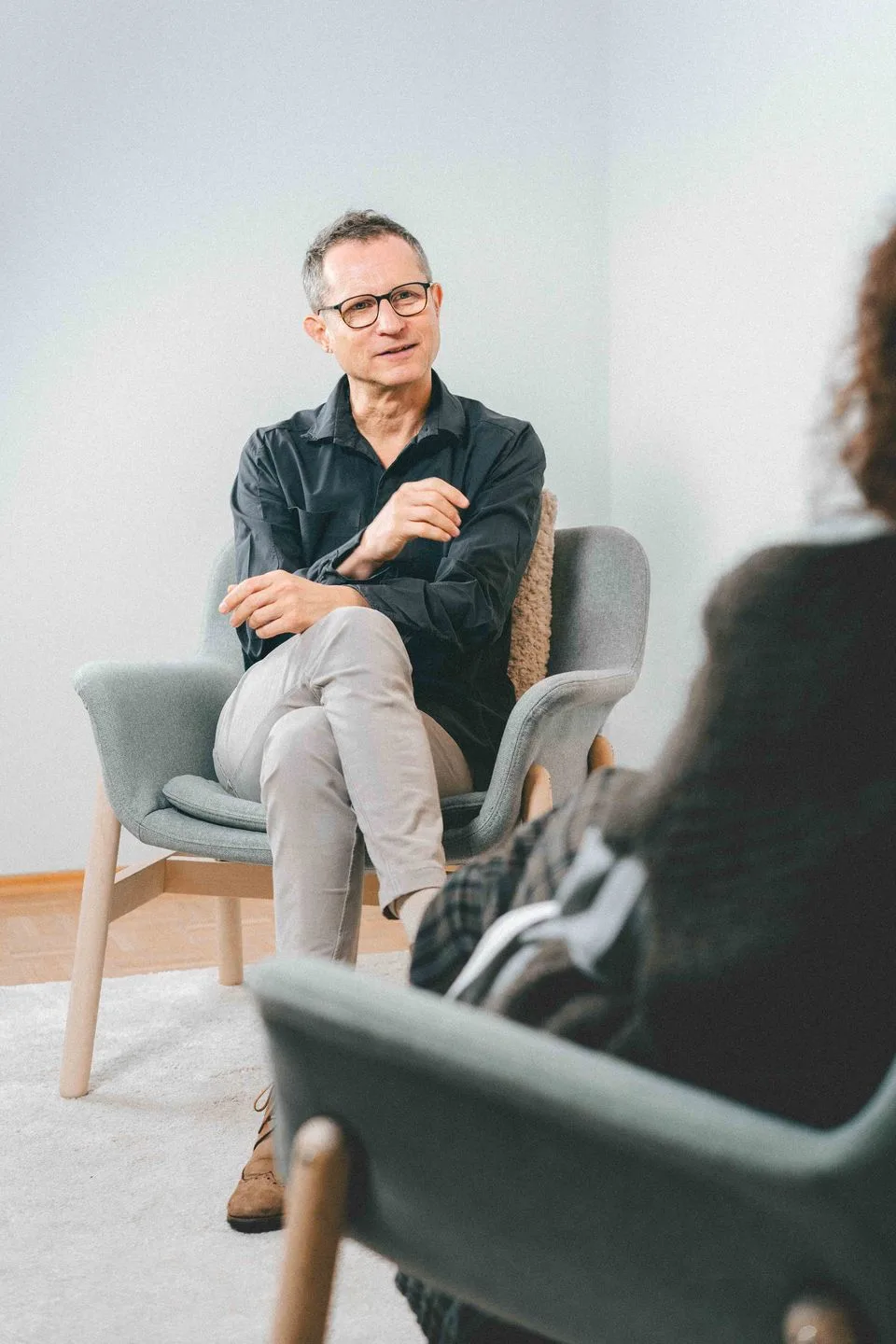
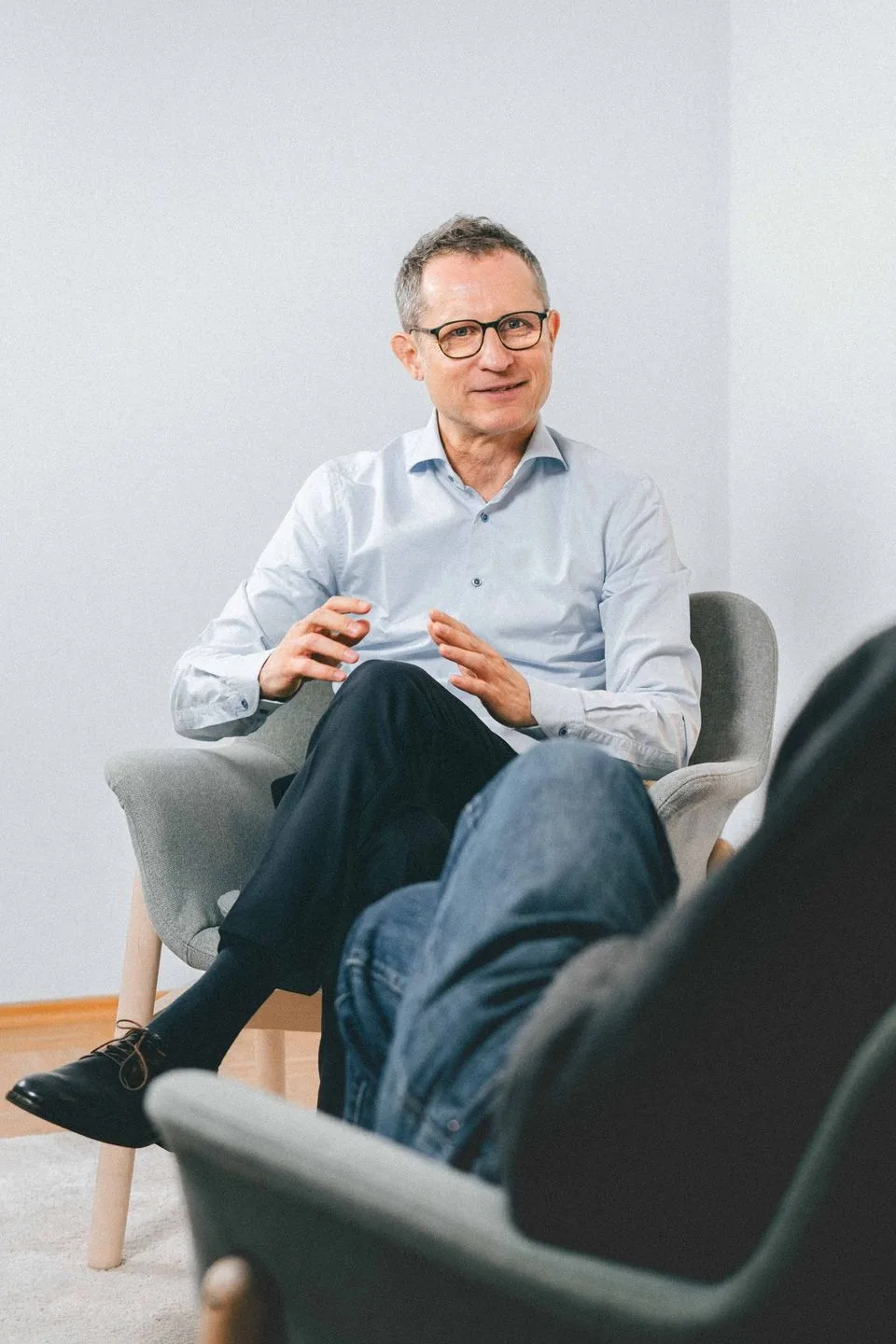
How do I approach our work together?
With attentiveness, clarity and without rushing to conclusions.
I listen carefully, ask questions and pay attention to subtle nuances, contradictions and things that may not yet have found their words.
Together, we make sense of what’s on your mind. We explore connections, discover new perspectives and consider what genuinely feels right for you.
Throughout this process, you remain the expert on your own life.
My role is not to tell you what’s right. It’s to support you in recognising that more clearly for yourself.
Methods provide inspiration. It’s the human connection that brings them to life.
Do I need to know exactly what I want to work on?
No.
Perhaps you’re facing a specific decision. Perhaps you’re feeling exhausted, going around in circles in your thoughts or wanting to change something without quite knowing how.
Or perhaps there’ simply that quiet feeling:
Something no longer feels right.
That’s a place we can begin.
You don’t need to prepare anything or share everything straight away. We start wherever you are right now.
Coaching or psychosocial counselling – which is right for me?
You don’t need to decide that in advance.
Coaching often focuses more on personal development, decision-making and what lies ahead:
“Where do I want to go?”
Psychosocial counselling also creates space for what may currently be weighing on you, causing uncertainty or disrupting your sense of balance:
"What do I need to be able to move forward from where I am now?"
These two perspectives often overlap.
What matters isn’t the label. What matters is what you need right now.
What does our work actually look like?
My approach is systemic, strengths- and resources-based, and grounded in resonance.
Depending on your individual needs, we may work with:
- Systemic questioning
- Exploring different perspectives
- Identifying and building on your strengths and resources
- Working with different parts of yourself
- Clarifying goals and decisions
- Reflecting on recurring patterns
- Developing concrete next steps for everyday life
In doing so, I combine systemic thinking with insights from resonance research, neurobiology and phenomenology.
For me, methods are tools. I don’t choose them because they’re part of a fixed coaching programme, but because they may be helpful in your particular situation.
How long does a session last?
I’ve found that 75-minute sessions tend to work particularly well for the kind of work we do together. They allow us to explore your concerns in as much depth as you wish, while leaving enough time and space to reflect on and integrate the insights gained. Of course, you can also arrange 90- or 120-minute sessions with me.
What can I take away from a session?
My aim isn’t for you to leave a session with simply more thoughts to think about.
Together, we bring clarity to what previously felt confusing or overwhelming. Connections become easier to understand. Decisions become more tangible. And often, you begin to recognise where you can make a difference yourself.
Sometimes it’s a new perspective.
Sometimes it’s a decision.
And sometimes it’s that one thought that suddenly changes the way you see everything.
A clearer head. A greater sense of calm. More confidence in your next step.
How long will we work together?
For as long as it’s meaningful and helpful for your situation.
Sometimes, a single session brings the clarity you need. Other concerns may benefit from several conversations or develop into a longer-term coaching relationship.
Together, we’ll find a rhythm that suits you and your needs.
There’s no obligation to commit to a specific number of sessions. If you’re looking for longer-term support, I also offer packages of three or five sessions at a reduced rate.
How can we get to know each other?
The easiest way is through a free 20-minute online introductory conversation.
You can tell me what’s on your mind. I’ll listen, ask a few initial questions and together we’ll explore what kind of support might be most helpful for you.
We don’t need to solve anything just yet.
It’s simply an opportunity to get a sense of each other and find out whether working together feels right for both of us.
That’s exactly what the first conversation is for.
Where do our sessions take place?
Depending on what works best for you:
In person at my practice in 1030 Vienna, Landstraßer Hauptstraße 73/202, in close proximity of U3 Subway Station Rochusgasse
Online via video call
By arrangement, also at your home in Vienna, Lower Austria or Burgenland
What matters to me is creating an environment where you can feel at ease, take a step back from everyday demands and give your full attention to what’s on your mind.
How do I work with Teams & Organisations?
I don’t just focus on the visible problem.
Together, we look at people, relationships, leadership, roles and structures – and, above all, how they influence one another.
A conflict may become visible between two people, yet its underlying causes may lie elsewhere. Unclear responsibilities, conflicting objectives or organisational structures can create behaviours that then appear to be personal problems.
That’s why one of my most important questions is:
What’s really going on here – and what’s keeping it in place?
Only when we understand this more clearly can we decide where change is most likely to make a difference.
Do we need team building or organisational development?
Perhaps neither. Perhaps both.
A team workshop can be valuable when the focus is on collaboration, trust, roles or shared ways of working.
But when the same problems keep recurring, several departments are affected, or structures and leadership play a significant role, a single workshop is often not enough.
That’s when we take a closer look:
Does the issue lie with people, relationships, leadership, structures – or the interplay between them?
The intervention follows the assessment. Not the other way around.
What questions do we explore together?
For example:
Which patterns keep repeating themselves?
Where are roles and responsibilities unclear?
Which decisions keep getting stuck – and why?
What unwritten rules are influencing behaviour behind the scenes?
What supports collaboration – and what gets in the way?
Which conflicts arise from organisational structures or leadership?
Where is energy being lost unnecessarily?
What would need to change for people to be able to act differently?
I’m not interested in finding someone to blame.
I’m interested in understanding what the system is currently producing – and how we can change it.
What methods do I use?
Depending on the situation, I combine different formats and interventions:
- Careful clarification of objectives, expectations and scope
- Conversations with relevant stakeholders
- Analysis of roles and responsibilities
- Systemic exploration of patterns and dynamics
- Team and leadership workshops
- Facilitation of conflict resolution and clarification processes
- Leadership coaching and executive sparring
- Improving decision-making processes and collaboration
- Supporting organisational change and development
The same principle applies here:
The method follows the problem. Not the problem the method.
What should be different as a result of our work?
The aim isn’t simply to have held a successful workshop.
People should better understand what they need from one another. Roles and responsibilities should become clearer. Decisions should be easier to make. Conflicts should be addressed earlier and more constructively.
And above all, change should become visible in everyday working life.
By the end of our work, there should be greater clarity about:
What’s happening here? What needs to change? Who takes responsibility? And what do we do next?
What does working together look like?
We begin by carefully clarifying the situation, objectives and expectations.
What are you observing? What would you like to change? Who is involved? And how would you recognise that the situation has improved?
Depending on the complexity, this may be followed by conversations with leaders or other stakeholders, a shared assessment of the situation and the development of an appropriate intervention.
This might take the form of a focused workshop.
Or it might develop into a process of organisational development over several months.
We don’t artificially define the scope in advance. Instead, we develop an approach that fits your organisation and the actual challenges you’re facing.
How long does organisational or team development take?
That depends on the situation.
A clearly defined issue may be effectively addressed through a workshop and a follow-up session.
Deep-rooted conflicts, periods of growth, cultural development or major organisational changes usually require more time.
What matters to me is that ongoing support doesn’t create dependency.
My aim isn’t to stay as long as possible – but to help create change that continues to make a difference long after our work together has ended.
How do we get to know each other?
For leaders and organisations, too, working together begins with a free 20-minute online introductory conversation.
You tell me about the situation and what you’re currently observing. I’ll ask a few initial questions, and together we’ll explore where the underlying issue might lie and what form of collaboration would make sense.
We don’t need to have a ready-made solution at this stage.
But by the end of our conversation, we should have a clearer understanding of the question that really needs to be answered.
Depending on your needs, our subsequent work can take place online, at your company’s premises or at an external location.