When responsibilities are clearly defined – but no one truly takes ownership.
Organisational Design & Self-Organisation.
In organisational design, I work with you to clarify roles, decision-making authority and interfaces – in a line organisation, a matrix or with more self-organisation. We look at where responsibilities overlap, where they fall through the cracks and why so much coordination is needed. The goal isn’t a model imposed from outside, but a design in which people don’t just have responsibility assigned to them – they genuinely take ownership.
Perhaps some of these statements sound familiar:
Why does no one take ownership here?
Why do we need so much coordination?
Why aren’t our people fulfilling their roles?
What’s the difference between assigned responsibilities and a genuine sense of ownership?
How do matrix and line-management structures fit together?
Many organisations have clearly defined roles, responsibilities and decision-making processes. And yet, a surprising amount of coordination is still required. Decisions move upwards, responsibilities are passed around, and people may fulfil their formal roles without truly feeling accountable for the outcome.
The difference often lies between formal responsibility and a genuine sense of ownership. A role may be clearly defined – but that doesn’t automatically create the feeling: "I take responsibility for this. I have the authority to make decisions. And I can genuinely make a difference."
To explore this, we look together at roles, decision-making authority, interfaces between teams and the informal ways in which work actually gets done in your organisation. We examine where responsibilities overlap, where they fall between the cracks and where additional coordination may have become necessary simply because decision-making authority isn’t clearly defined.
Matrix structures don’t have to be at odds with line management either.
What matters is that people understand which role they’re acting in, who has the authority to make which decisions and where shared responsibility is genuinely needed.
An organisation where roles provide clarity, decisions are made more quickly and people have the space to truly take ownership.
I’m familiar with these tensions from my own leadership experience in large, internationally operating organisations. Formal structures can provide clarity and direction – but they can also create complexity when they don’t reflect how work actually happens.
My role, therefore, isn’t to impose a predefined organisational model on you.
Together, we develop an organisational design that fits your strategy, your people and the realities of everyday work.
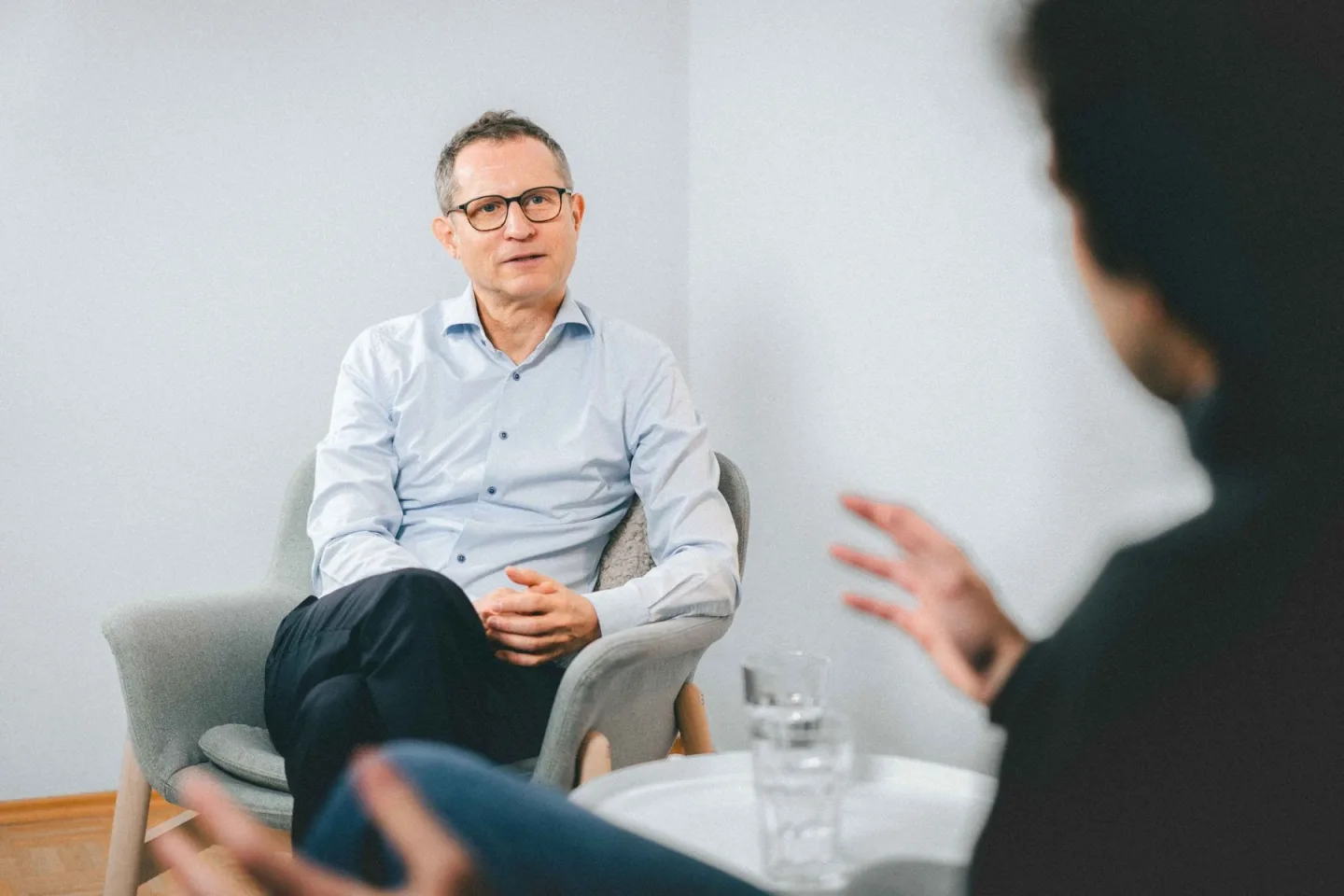 Photo: Valentin Roher
What’s happening in your organisation right now?
I’d love to get to know you and your business through an on-site visit or an informal first conversation.
Related Situations.
- Transformation & Strategic Realignment
When growth outpaces the organisation.
- Leadership & Leadership Development
When leadership begins to lose its impact.
- People & Culture: Organisational Culture & Purpose
When good initiatives need to become meaningful change in everyday practice.
- Change Architecture & Organisational Capacity for Change
When change becomes exhausting, the answer isn’t more change – it’s a clearer sense of direction.
- Executive Coaching & Sparring
When leadership becomes personal.
- Team Development & Collaboration
When talented individuals need to become a strong team.